
The short version
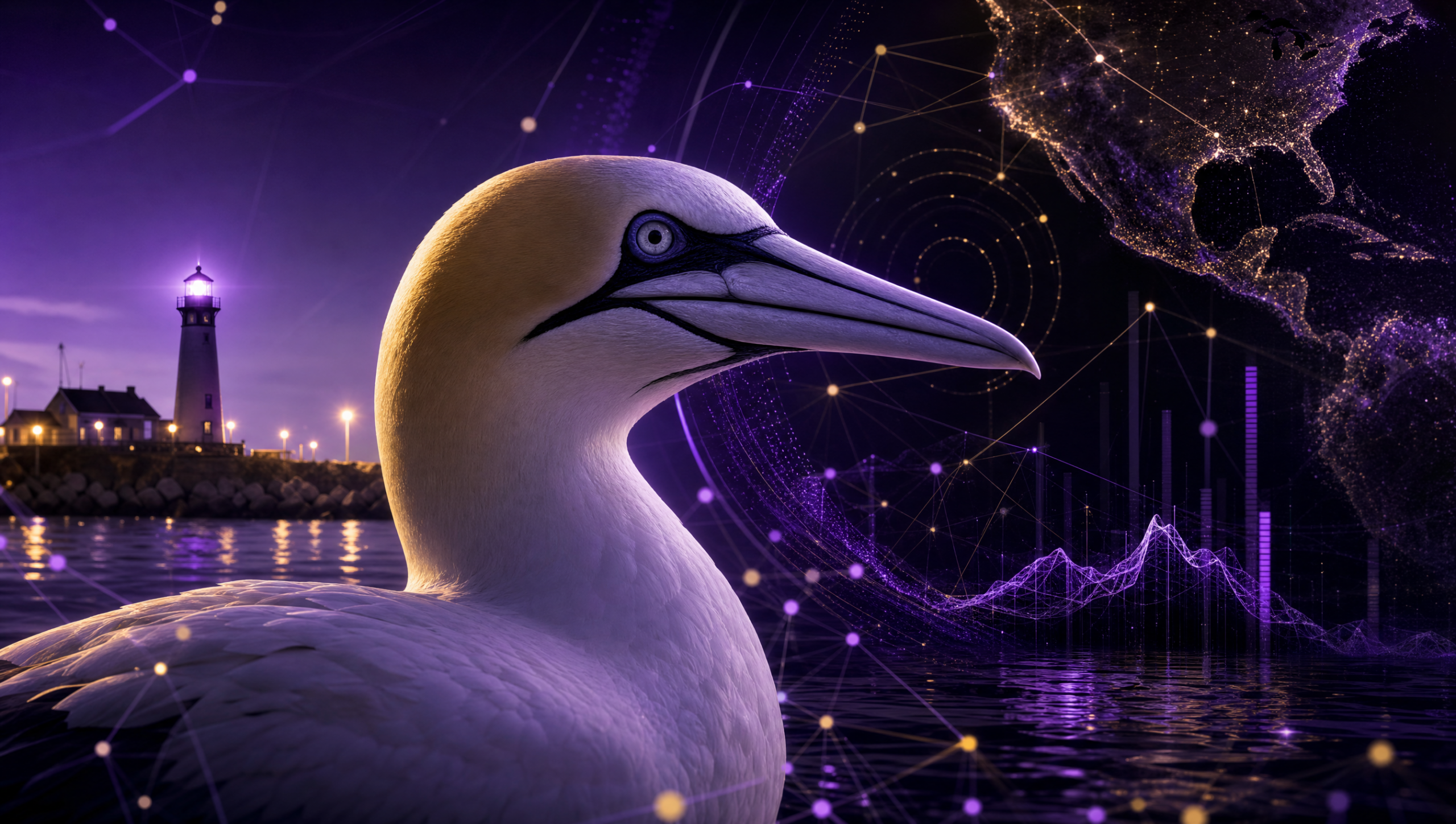
A Northern Gannet, a species native to the North Atlantic, has been living as the sole Pacific representative for 14 years in a California harbor.
In a striking ornithological event, a single Northern Gannet lives thousands of miles from its normal territory, turning into a local star in a California harbor. This bird, called Morris, is thought to be the sole member of its species in the whole Pacific Ocean.
Key takeaways
- The bird, named Morris, is a Northern Gannet (Morus bassanus), a species native to the North Atlantic.
- Morris first appeared at the Farallon Islands off San Francisco 14 years ago and has since settled at Pillar Point Harbor in California.
- He is considered the only known Northern Gannet in the Pacific Ocean.
- Morris is easily identifiable by his white plumage and yellow head, often seen near the harbor sign with Brandt’s cormorants.
- His presence for over a decade makes him a stable, if highly unusual, resident of the local ecosystem.
A Transoceanic Wanderer
Northern Gannets are large seabirds whose typical breeding and feeding areas stay in the North Atlantic. Finding one in the Pacific is a rare occurrence. A sighting report from August 15, 2026, notes Morris first reached the Farallon Islands, a national wildlife refuge west of San Francisco, fourteen years earlier. His trek across the continent or possibly around the Americas stays unknown, but his choice to remain has turned him into a lasting feature.
Harbor Life with Cormorants
Morris now calls Pillar Point Harbor in California home. Birdwatchers describe him as “quite easy to spot,” standing out as the only white bird with a yellow head among local flocks. People often see him near the harbor sign at the commercial pier’s end, usually with the smaller, black Brandt’s cormorants. This friendship across species boosts his special standing as a lost yet seemingly well-adjusted local.
Why it matters
Morris’s extended stay tests common ideas about bird migration and habitat. While stray birds sometimes appear far from home, a 14-year residence is very unusual. It points to a successful, if lonely, adjustment to a completely different marine setting. His ongoing good health and regular sightings give scientists a special, continuous case for studying animal direction, adaptation, and possible effects of shifting ocean patterns. For people nearby, he acts as a cherished natural curiosity and a prompt about nature’s unpredictable marvels.
📡 Original reporting: Simon Willison. AI Craft Technologies’ news engine summarised and rewrote this story in our own words; facts are drawn from the linked source.
⚙️ How this article was made — fully automated
This is a live demo of the ACT News Factory engine. Want one running on your own site? See our services →