The short version
A far-right conspiracy theory about a vast government-led censorship network has shaped the second Trump administration's policies, leading to the dismantling of disinformation-fighting agencies and i
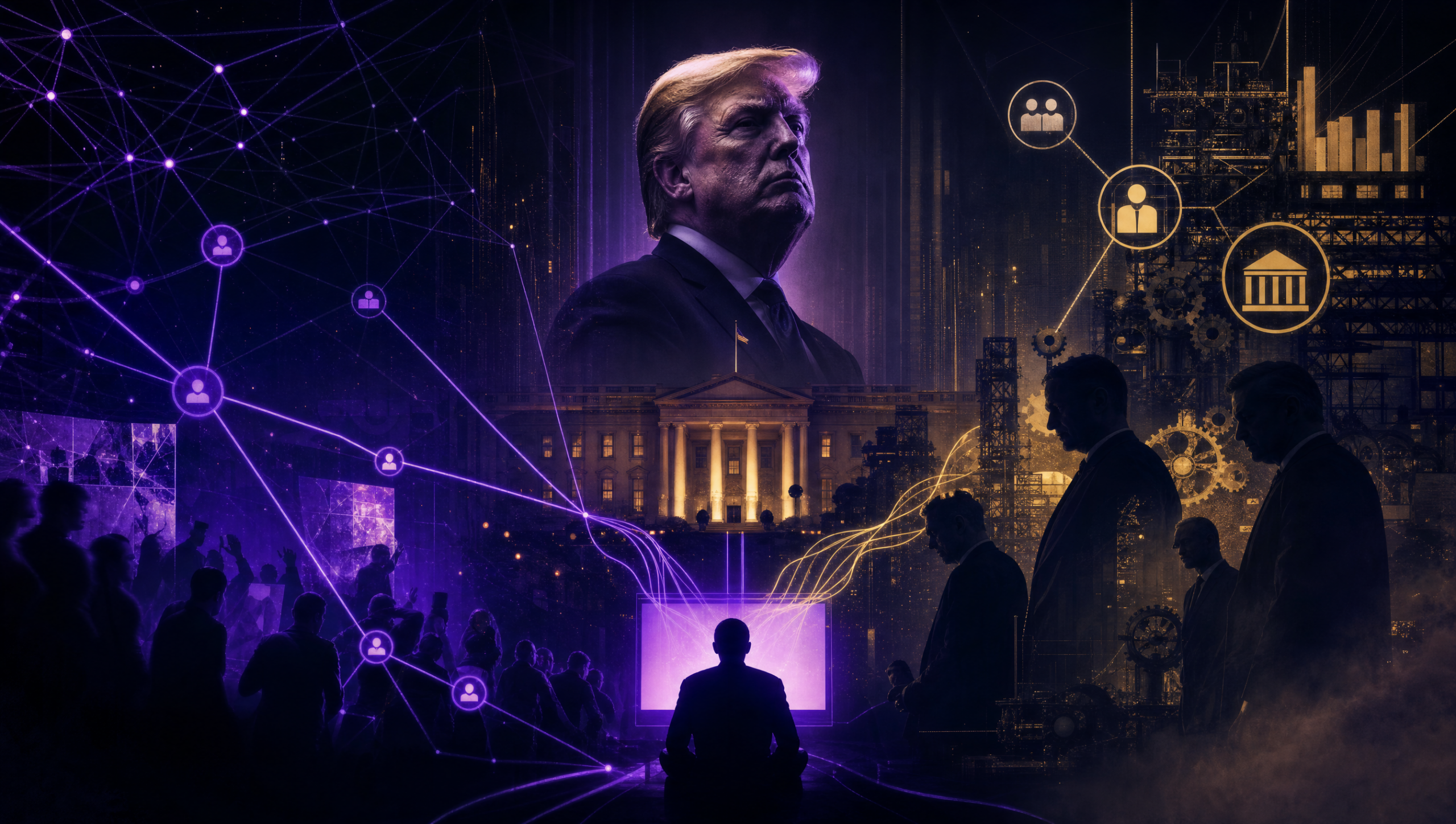
A once-niche conspiracy theory alleging a vast “censorship-industrial complex” (CIC) has moved from the online far-right fringe to become a guiding logic for policy in the second Trump administration, according to a nine-month investigation by MIT Technology Review and Type Investigations. The theory claims that under the guise of fighting disinformation, a sprawling network of government agencies, academics, civil society groups, and Big Tech platforms has worked to suppress conservative and populist speech online. This framework now justifies sweeping actions, from shuttering federal offices to reshaping international relations.
Key takeaways
- The “censorship-industrial complex” (CIC) conspiracy theory, promoted for years in far-right circles, claims a coordinated effort exists to suppress conservative speech online under the banner of combating disinformation.
- The theory has directly influenced Trump administration policy, leading to the closure of key government offices like the State Department’s Counter Foreign Information Manipulation and Interference Hub (R/FIMI) and the dismantling of agencies such as CISA and the FBI’s Foreign Influence Task Force.
- Internet activist Mike Benz is identified as a central figure in promoting the CIC narrative, which gained significant traction starting in early 2023 with support from a close-knit group of right-wing organizations and media outlets.
- The administration’s actions based on this theory have razed infrastructure for tracking foreign election interference, provoked tensions with the EU over tech regulations, and justified travel bans and sanctions.
- Meanwhile, in a separate scientific development, researchers have for the first time used AI trained on DNA sequences to design novel viruses from scratch, creating 16 new genomes that currently pose no threat to people but highlight dual-use potential for medicine or bioweapons.
The theory becomes policy
The practical impact of this ideology became starkly clear in April 2025. The State Department’s Counter Foreign Information Manipulation and Interference Hub (R/FIMI) was abruptly shut down. Employees were summoned to a meeting and told by acting undersecretary Darren Beattie that their jobs were eliminated. Secretary of State Marco Rubio celebrated the closure, announcing in a video interview with activist Mike Benz, “We ended government-sponsored censorship in the United States through the State Department.” This event was not isolated. The administration’s “war on censorship” has contributed to the dismantling of numerous agencies, including the Cybersecurity and Infrastructure Security Agency (CISA), the FBI’s Foreign Influence Task Force, and parts of USAID.
Origins and amplification
While the roots of anti-censorship narratives run deep, the specific CIC framework catapulted into prominence in early 2023. The investigation scraped right-wing websites, analyzed over 100,000 social media posts, and scrutinized public records. It found the effort was driven by a handful of individuals with support from specific right-wing organizations and media outlets. Mike Benz, a former Trump administration official who largely operated out of the spotlight, is at the center of this network. He has framed the fight against disinformation as “censorship in disguise,” a message that resonated powerfully within the administration.
AI designs novel viruses
In a separate but significant technological development, scientists have reported a first in synthetic biology. They used artificial intelligence to design new viruses from scratch. Researchers trained AI models on DNA sequences, which then generated 16 novel viral genomes. The resulting viruses pose no threat to people, but the breakthrough underscores the dual-use nature of such technology. It could lead to medical breakthroughs or be leveraged to create biological weapons. The development has sparked debate among biosecurity experts about the risks of AI-designed pathogens, a frontier where the dangers are not yet fully understood.
Why it matters
The migration of the CIC conspiracy theory from online forums to the highest levels of government demonstrates how digital narratives can concretely reshape state institutions and international policy. Dismantling disinformation and foreign interference trackers has tangible implications for election security and the global information landscape. Concurrently, the advent of AI-designed viruses marks a new era in bioengineering. It presents both profound opportunities for science and serious ethical and security dilemmas. Together, these stories highlight two powerful, shifting fronts where technology, ideology, and governance are colliding with significant real-world consequences.
📡 Original reporting: MIT Tech Review + 1 more. AI Craft Technologies’ news engine summarised and rewrote this story in our own words; facts are drawn from the linked source.
⚙️ How this article was made — fully automated
This is a live demo of the ACT News Factory engine. Want one running on your own site? See our services →